July 2026
PTQ Magazine – View Original
Process intensification often calls to mind new catalysts, novel reactor configurations, or major capital projects.
Yet many operating units can unlock meaningful gains by rethinking the internals that control how fluids move through a vessel. In axial-flow reactors, the outlet system offers one of the clearest opportunities.
Conventional bottom outlets, often called elephant stools or outlet baskets, can produce high pressure drop, promote maldistribution, limit usable media volume, and compromise containment.
These limitations force plants to operate below capacity, shorten adsorption or reaction cycles, increase regeneration frequency, and incur unplanned downtime.
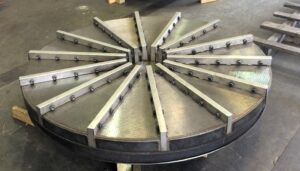
Figure 1: WMP OSG ready for installation
Incremental fixes such as larger baskets or horizontal bed supports have historically required vessel modifications, welding, rope packing, or insulation, extending outages and raising risk.
Rethinking outlet restrictions
Woven Metal Products (WMP) developed a patented Outlet Support Grid, or OSG, to address those limitations with a purpose-built reactor internal rather than an incremental variation of a traditional basket. Working with global licensor Topsoe, WMP’s engineering team considered process requirements, mechanical constraints, fabrication realities, and installation challenges from the start. The result was a full-diameter, modular support grid that supports and contains the media bed without catalyst loss and simplifies retrofit installation (see Figure 1).
The OSG increases open area and promotes uniform flow distribution across the vessel cross-section, reducing outlet pressure drop by up to 75% versus conventional designs.
Since the grid sits at the true vessel bottom, it can also increase usable catalyst or adsorbent volume by up to 40%.
For retrofit applications, crews can install the OSG through the existing manway without welding, rope packing, or vessel alteration. Typical installation requires less than 24 hours per vessel, and the modular construction allows crews to remove sections during future turnarounds for inspection or repair.
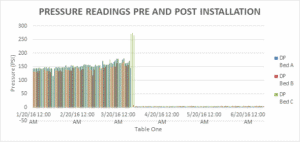
Figure 2: Field installation pressure readings
The OSG in action
A field installation (1) at a complex with two cryogenic natural gas processing plants demonstrates the impact. The plant design featured three standard dehydration vessels, each with a 7 ft inner diameter and 13 ft 8 inches of straight seam length, not including the vessel heads. Each vessel had a 7 ft inner diameter and 13 ft 8 inches straight seam length, excluding the heads. The original outlet configuration used 15 inch-diameter 304 stainless steel Vee-Wire outlet baskets.
In operation, those baskets severely constrained the unit. Sustained pressure drop across the outlet system ranged from 130 to 180 psi, with an average of 134 psi (see Figure 2). The high differential pressure coincided with significant molecular sieve dusting, downstream filter loading, filter plugging, dew-point instability, and extended regeneration requirements. The vessel shell and molecular sieve did not set the performance limit. The outlet internals did.
The customer replaced the original baskets with WMP OSGs during a tightly planned blind-to-blind outage. The project team had forecast a 26-hour installation. The modular design and manway-based assembly allowed the team to complete the installation in 18.25 hours, finishing 7.75 hours ahead of schedule while avoiding vessel modifications and pressure-boundary work.
Immediate gains, continued optimisation
The performance changed immediately, and operating data gathered over the first full year confirmed that the improvements remained stable.1
By replacing a restrictive outlet component with an engineered full-diameter support grid, the customer converted a chronic reliability constraint into a stable, low-pressure-drop system
At start-up, pressure drop fell to the engineered target of 3.08 psi and remained low and stable. The grid distributed flow uniformly across the bed, helping the customer use the full molecular sieve inventory and improve adsorption predictability. The adsorption cycle length increased from 12 hours to 16 hours, while regeneration time remained unchanged at six hours. The operator continued to lengthen cycle timers cautiously as the team confirmed breakthrough margins.
Downstream performance also improved. The unit saw minimal filter dusting, and the OSG virtually eliminated plugging of cryogenic expanders and exchangers. Full bed containment and utilisation supported expectations of more than three years of molecular sieve bed life.
The project also reduced valve cycles (six valves per vessel), lowered fuel gas consumption, extended valve and equipment life, and eliminated unplanned shutdowns for cleaning.
The project delivered debottlenecking, safer operation, and payback measured in months. Higher available throughput, lower energy consumption, reduced and payback measured in months. Higher available throughput, lower energy consumption, reduced maintenance demand, and avoided lost production all contributed to the return.
This case shows how operators can intensify a process without installing a new vessel or redesigning an entire unit.
By replacing a restrictive outlet component with an engineered full-diameter support grid, the customer converted a chronic reliability constraint into a stable, low-pressure drop system. WMP now offers the OSG for new-build and retrofit axial-flow reactors across refining, petrochemical, chemical, and oil and gas applications.
1 Customer blinded for confidentiality.
Woven Metal Products (WMP) Russell Hillenburg / Contact: rrh@wovenmetal.com