
By Robert Lasser, VP Business Development / Tower Division
In the oil and gas, chemical, petrochemical and other industries, turnarounds and maintenance projects rely on smart purchasing decisions.
With limited resources, many purchasing teams often lack the technical expertise or engineering support to effectively evaluate multiple vendor quotes, which can result in costly mistakes.
Too often, the default purchasing approach is simply choosing the lowest bid from an approved vendor. This can — and often does — result in lower product performance, reduced service intervals, and unexpected installation costs. It can even delay the end schedule of outages.
To navigate this, buyers must look beyond the bottom-line quote total and scrutinize the product details from all their vendor quotes.
The Problem: A Shift in Quoting Practices
The industry is seeing a shift when it comes to replacement parts quoting.
Many vendors are now quoting proprietary or patented products, disregarding requests for older, existing equipment. Instead of offering robust, replacement-in-kind solutions, vendors are answering with newer — often patented — products that may be less durable and made with thinner metal.
While these products may appear less expensive on paper, they’re not always made with the same quality and thickness of materials as past installed products. They’re designed (and sold) with more frequent replaceability in mind.
For example, tray deck and some packing thicknesses have generally decreased, which can increase vibration and loosening tray panels, as well as cause faster failure rates in towers due to corrosion and metal fatigue cracking.

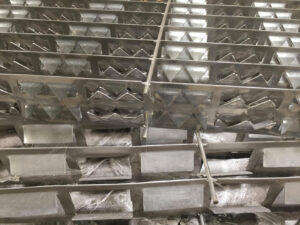
On quotes for tower packings, be sure to ask for details on product thickness, so you can better gauge corrosion resistance and how long they’ll last.
Delays can also happen when vendors intentionally include too few replacement parts or consignment hardware in their bids to make their price look lower and increase their chances of winning the job.
During a turnaround, this can leave your plant short on critical packings or hardware, resulting in rush orders with premium shipping costs, not to mention adding more downtime to your critical outage. With today’s tighter budgets, purchasing teams that focus only on total price may be caught off guard. Unplanned or hidden costs can end up far outweighing the initial savings.
The Solution: Evaluate, Don’t Assume
To avoid these pitfalls, purchasing teams need to adopt a more discerning approach. Here are tips to ensure you get what your team needs:
1. Partner with a Vendor Who Listens: Choose a supplier who acts as a consultant, not just a part’s provider. They should ask about your specific needs, rather than assuming they know or only offer their proprietary solutions. A good partner offers replacement-in-kind options alongside upgrades when performance improvements are warranted.
2. Scrutinize the Entire Quote: Don’t just glance at the total quote cost. Review item descriptions, quantities, unit prices and material specifications. Thinner materials may fail sooner, and insufficient quantities may leave your team in a bind during the actual shutdown execution.
3. Ask Questions: Request a line-by-line breakdown of the quote, including quantities and materials. For example, in hardware quotes, make sure an emergency surplus is included to avoid shortages during maintenance. Confirm the quantity offered for each item accounts for all contingencies and avoid LOT prices that do not provide any details.
4. Prioritize Longevity Over Price: A low upfront cost may lead to more frequent replacements. Evaluate products based on their lifecycle and durability, not just the initial quote cost. For instance, verify the thickness of trays or random packing products to determine their corrosion resistance and service life.
Our Approach: Transparency and Reliability
At Woven Metal Products (WMP), our goal is to help our customers succeed by offering solutions that fit their specific needs. We take the time to understand our customers’ challenges and work closely with them to find the right approach.
As a family-owned business with nearly 60 years of experience, we treat every customer and project with the same level of care — no matter the size or budget.
Simply put, we aim to be a solution’s provider, not just another supplier.
For process internals replacements, we don’t solely recommend single-vendor, proprietary product upgrades across the plant, unless upgrades are carefully evaluated for each plant application.
For replacement hardware, our consignment program allows customers to have larger quantities on-site and only pay for what they actually use during their outage.
We provide detailed quotes with item descriptions, unit prices, and quantities, and manage the entire process from drawing takeoff calculations, job site delivery and final return.
Our team delivers fully stocked consignment trailers by unit or individual lockers for each plant vessel directly to your plant’s job site, and we inventory what’s returned to us after your outage is complete. It’s our way to help you minimize downtime and field counts and eliminate rush order shipping costs, as you have an appropriate amount of hardware ready to complete your outage.

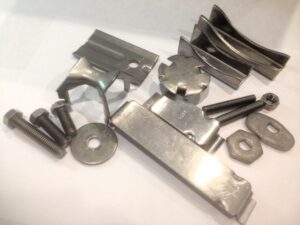
WMP’s hardware consignment program ensures you have what you need to finish your project.
By evaluating quotes thoroughly and partnering with a vendor who prioritizes your project’s success, you can avoid hidden costs and ensure your turnaround runs smoothly.
Know your quote. Because what you’re really buying matters.
Reach out to our team with questions anytime.